Surbiton Commercial Floor Sanding for High-Traffic Business Premises
If you need commercial floor sanding in Surbiton without shutting your business for days, the key is proper planning, dust-controlled machinery, the right grit sequence, and a finish chosen for fast return to service. For shops, pubs, offices, studios, and customer-facing premises, professional sanding can restore worn timber floors while keeping disruption to a minimum when the work is scheduled in phases and matched to your trading pattern.
At Surbiton Floor Sanding, commercial projects are not treated like standard domestic jobs. A busy pub floor, a retail unit with heavy footfall, or an office walkway near reception all demand a different restoration strategy. The sanding system, repair plan, finish selection, drying window, access control, and aftercare advice all need to support one thing: getting your premises back into use quickly without compromising the quality of the finish.
In Surbiton, many commercial premises combine appearance with hard daily wear. High street shops need floors that look presentable from opening time. Pubs need surfaces that can cope with chairs, foot traffic, spill risk, and evening trade. Offices need clean, professional timber floors that do not create unnecessary downtime for staff or visitors. Done properly, commercial wood floor restoration can improve appearance, extend floor life, and reduce the need for premature replacement.
Why minimal downtime matters in commercial floor sanding
For most businesses, floor restoration is not just a maintenance issue. It is an operational issue. Every extra hour of closure affects revenue, staff movement, customer experience, and scheduling. That is why the best commercial floor sanding work starts well before the machines are switched on.
A proper survey should look at:
- Floor type and timber species
- Current finish and wear pattern
- Depth of previous sanding
- Subfloor stability and movement
- Moisture risk around entrances, bars, kitchens, or rear access points
- Traffic intensity by zone
- Whether work should be phased room-by-room or area-by-area
Commercial clients in Surbiton often benefit from staged programmes rather than full closures. A front-of-house retail zone may be restored separately from stock or fitting areas. A pub may need the lounge, corridor, and bar perimeter handled in sections. An office may require evening or weekend scheduling so staff can return with minimal interruption. The restoration plan should fit the way the business actually operates, not the other way round.
Which Surbiton businesses benefit from commercial floor sanding?
Commercial floor sanding is suitable for a wide range of timber floors across Surbiton, including:
- Independent shops and boutiques
- Pubs, bars, and hospitality venues
- Offices and meeting suites
- Studios and practice spaces
- Clinics and reception areas
- Schools, halls, and community buildings
- Restaurants and café seating zones
- Showrooms and client-facing interiors
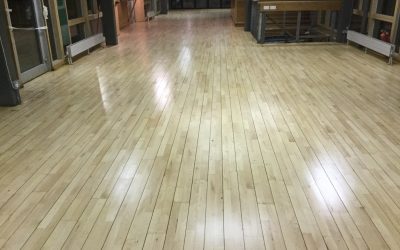
Many commercial floors look tired long before they are structurally finished. Dull lacquer, blackened edges, chair scuffs, tracked-in grit, heel marks, minor cupping, and patchy colour often make the whole premises feel older than it is. Professional wood floor sanding in Surbiton can remove that worn surface layer and bring the timber back to a clean, serviceable standard with a finish better suited to commercial use.
Common issues on commercial wood floors
Commercial floors fail differently from domestic floors because the wear is more concentrated and repetitive. In shops and offices, the heaviest damage usually appears in threshold areas, till zones, walkways, desks, meeting-room routes, and waiting areas. In pubs, the floor near the bar, tables, and entrances often shows the highest abrasion rate.
Typical issues include:
- Finish breakdown in traffic lanes
- Scratches from chairs, tables, and moving furniture
- Dullness from ingrained dirt and micro-abrasion
- Moisture staining near doorways or drinks service areas
- Uneven sheen where spot repairs were attempted previously
- Gaps in older floorboards due to seasonal movement
- Localised damage around service counters and workstations
- Trip-risk defects from loose boards or unstable blocks
Where older softwood boards are involved, there may also be old fixings, previous filler failure, edge splintering, and movement across sections of the floor. In older commercial premises around Surbiton, especially where period timber has been covered and uncovered multiple times, it is important to assess whether resin filling, timber slivers, local board replacement, or minor subfloor correction is needed before the finishing stage begins.
The best approach for minimal-disruption floor sanding
Minimal downtime is achieved through method, not guesswork. A professional commercial sanding programme usually includes the following steps:
1. Site survey and access planning
The survey should identify access times, alarm or key arrangements, loading restrictions, furniture movement, and the order of work. On active commercial premises, this step is essential.
2. Clear zoning of work areas
Where possible, the floor is divided into sections so parts of the premises remain usable. This is especially helpful for larger offices, hospitality venues, and mixed-use interiors.
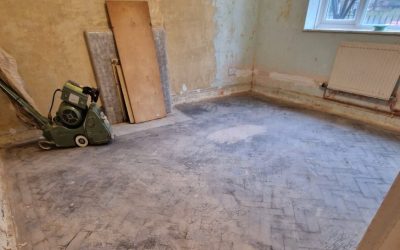
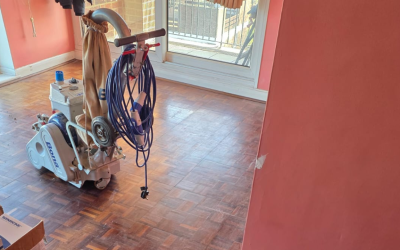
3. Dust-controlled sanding
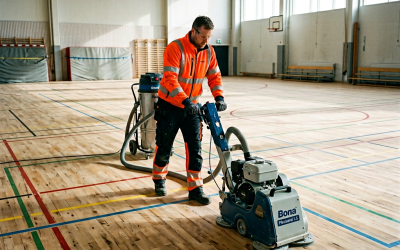
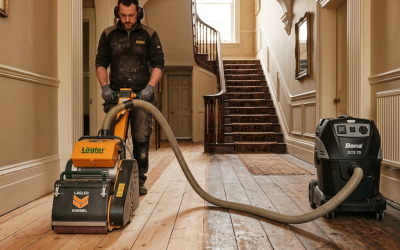
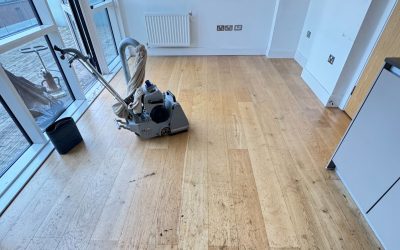
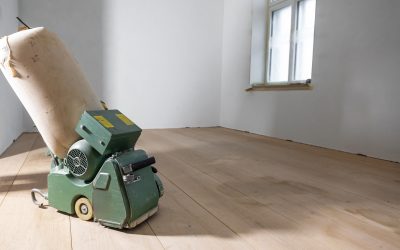
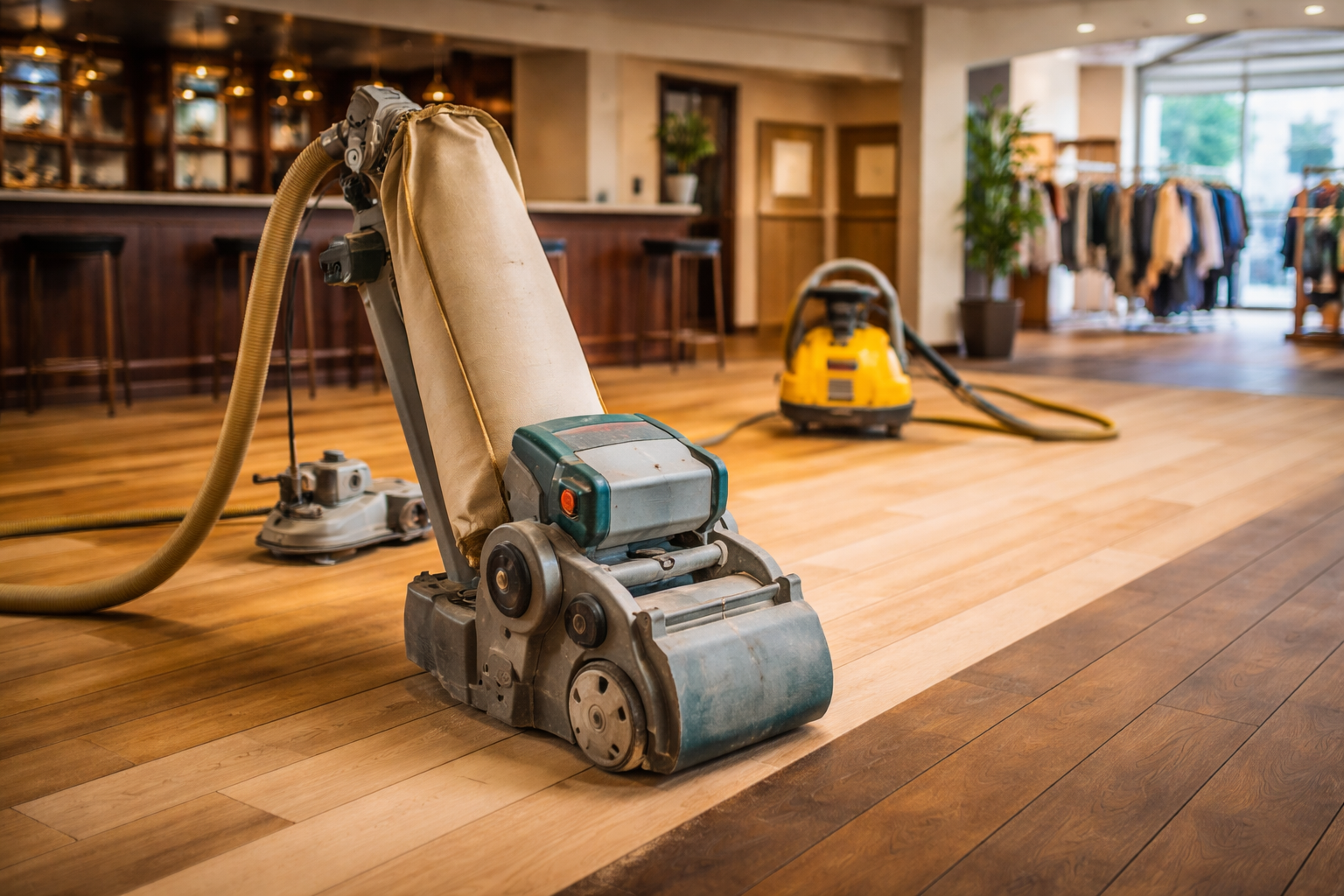
Modern belt and edging systems with professional extraction dramatically reduce airborne dust compared with old-style sanding methods. That matters in retail and office settings where adjacent surfaces, shelving, and fittings need to stay cleaner during the process. You can see the site’s existing emphasis on dust-free, flawless results in its current Surbiton blog coverage.
4. Correct grit progression
Commercial floors should never be rushed through random sanding stages. A proper sequence may start aggressively enough to remove failed coatings and flatten wear, then progress through finer abrasives to prepare the timber for sealing. On many worn softwood or hardwood floors, a sequence in the professional range of 36 to 120 grit may be used depending on the floor condition, previous finishes, and timber hardness.
5. Repairs before sealing
Loose boards, minor splits, failed filler, and local damage should be dealt with before finishing. On older boards, small gaps may be filled with a resin-and-sawdust system where appropriate, while wider defects may need timber slivers or local board replacement rather than cosmetic filler.
6. Fast-return commercial finishing system
For many shops, pubs, and offices, the finish choice is what determines whether the project supports minimal downtime. Water-based commercial lacquer is often the practical option where speed, durability, and low odour matter most.
Why finish selection makes such a big difference
Not every finish suits every commercial setting. If the brief is minimal downtime, the finishing system must match the operational reality of the premises.
For many Surbiton commercial projects, a high-performance water-based lacquer is the strongest choice because it offers:
- Fast recoating windows
- Lower odour than many traditional systems
- Strong wear resistance for high footfall
- A clean, professional appearance in matt or satin sheens
- Shorter return-to-use times than slower-curing oil systems
Bona Traffic HD is commonly specified for demanding commercial wood floors because it is designed for heavy-use environments and supports quick project turnaround when conditions are right. For businesses where fast access matters, this type of finish is often more suitable than a slower-curing oil-led system.
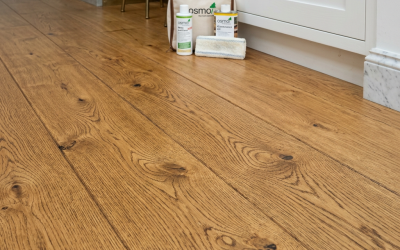
Hardwax oil can still be an excellent choice in the right setting, especially where a more natural look and easier local maintenance are priorities. However, where continuous commercial use and minimal closure are the main concerns, fast-curing lacquer usually gives a better operational result.
Shops: keeping presentation standards high
Retail floors are judged instantly. Scuffed, patchy timber affects the way the whole premises feels to customers. In Surbiton shops, the floor often works as part of the visual merchandising environment, so colour consistency, clarity of grain, and a clean matt or satin finish all matter.
For shops, we would normally prioritise:
- Even, low-dust sanding
- Out-of-hours scheduling
- Fast-drying lacquer systems
- Protection against tracked-in grit near entrances
- Durable finish build in high-footfall zones
If your shop floor is structurally sound but visibly worn, sanding is usually more cost-effective than full replacement. The site’s prices page is also useful when planning budgets for restoration versus replacement.
Pubs: durability, slip awareness, and heavy wear
Pubs place a different type of stress on timber flooring. Chairs drag, tables move, footfall spikes at predictable times, and entrances often bring in grit and moisture. There may also be a contrast between front-of-house presentation areas and harder-wearing service routes.
Commercial floor sanding for pubs should focus on:
- Deep removal of contaminated or failed old coatings
- Attention to edge wear and traffic lanes
- Repairs around loose boards and service zones
- Finish selection appropriate to heavy use
- Practical aftercare guidance for cleaning teams
Where a pub wants a more refined timber appearance without long closure, phased restoration and a durable lacquer build are normally the most practical route. The finish also needs time to cure properly, so good planning is essential even when the floor becomes usable relatively quickly.
Offices: cleaner process, smarter appearance
Office floors are often restored not because they are badly damaged, but because they no longer look professional. Dull timber in reception areas, meeting rooms, corridors, and executive offices can undermine the visual standard of the workspace.
For offices, the priorities are usually:
- Low-disruption scheduling
- Dust-controlled machinery
- Quiet coordination with building access rules
- Uniform finish across client-facing spaces
- Clear drying and re-entry guidance for staff
If your office already has timber floors but they have lost colour and clarity, a restoration programme is often the fastest route to a smarter interior. For broader guidance on timber floor restoration standards and finish expectations, the published Surbiton article Hardwood Floor Sanding Surbiton: Fast, Clean, Long-Lasting is also a relevant internal resource.
How long does commercial floor sanding take?
The honest answer is that it depends on floor area, timber condition, access, repairs, and finish choice. A small commercial room with limited damage will move much faster than a pub floor with heavy wear, failed coatings, and multiple repair points.
That said, the usual time factors are:
- Preparation and furniture or fixture clearance
- How much old coating must be removed
- Whether boards need repair or filling
- How many finish coats are required
- Ambient temperature and humidity
- The return-to-service properties of the selected finish
This is why fast-curing commercial lacquer is often recommended where business continuity matters. The project is not just about sanding speed. It is about total downtime, including drying and early-use restrictions.
Technical details that separate professional work from rushed work
Commercial clients should look beyond basic promises of a “quick job”. A reliable contractor should understand the technical side of restoration, including:
- Moisture-content assessment where needed
- Subfloor stability and movement checks
- Correct abrasive progression
- Edge blending and perimeter detail
- Compatibility between primer and topcoat systems
- VOC-conscious product choice for occupied buildings
- Repair methods suited to gap width and timber movement
- Maintenance planning based on actual traffic level
That technical discipline is what keeps a commercial floor looking consistent after reopening. It is also what reduces the risk of premature finish failure in busy areas.
Aftercare: protecting the restored floor once you reopen
Minimal downtime should not mean poor aftercare. Once the floor is back in service, staff need practical guidance so the restored finish is not damaged early.
For commercial premises, that usually means:
- Using entrance matting to trap grit
- Avoiding excessively wet mopping
- Using cleaners appropriate for sealed wood floors
- Adding felt protection under movable furniture
- Monitoring traffic lanes for early wear
- Booking maintenance before the finish fully breaks down
Businesses that maintain their floors properly usually get far better long-term value from restoration. For general timber floor care guidance, the site’s earlier post Surbiton Wood Floor Sanding: The Complete Homeowner’s Guide also offers useful background on sanding, finishes, and floor upkeep.
Why commercial sanding is often better than replacement
Full floor replacement can be far more disruptive than restoration. It creates longer closures, more waste, more material movement through the premises, and often a much higher total cost. If the existing timber floor still has sufficient life in it, sanding and refinishing is usually the more efficient route.
Commercial restoration can help you:
- Reduce fit-out costs
- Improve presentation without a full refurbishment
- Retain original timber character
- Minimise operational disruption
- Extend the service life of the floor
Book commercial floor sanding in Surbiton with a downtime-focused plan
If your shop, pub, or office floor is worn but still worth saving, a professional sanding and refinishing plan can restore appearance and durability without unnecessary closure. The right approach combines commercial-grade sanding equipment, low-dust working methods, careful repairs, and a finish chosen around real business needs rather than generic recommendations.
For businesses looking for commercial floor sanding in Surbiton, the priority should be a practical plan: clear survey, realistic programme, phased access where possible, and a finish system that supports fast return to service. If you want pricing, availability, or a site assessment, use the contact page or request a survey through the Request a Callback page.
For a high-traffic commercial finish reference, see Bona Traffic HD technical data before finalising your finish specification.